
OJE COMPONENT LAUNCHES COHORT 2 SESD INDUCTION ACROSS SEVEN COUNTIES
Empowering Youth with Socio-Emotional Skills for Workplace Success
The On-the-Job Experience (OJE) component of the National Youth Opportunities Towards Advancement (NYOTA) Project has officially commenced Lot 1 Cohort 2 induction for the 20-day Socio-Emotional Skills Development (SESD) training across seven counties.
The induction exercise began successfully in Nakuru, Narok, Kericho, Bomet, Homa Bay, Kisii, and Nyamira counties, marking another important milestone in advancing youth employability. Across the counties, hundreds of enthusiastic young beneficiaries reported to training venues, ready to begin their journey toward improved workplace readiness and entrepreneurship.
Participation levels in several wards surpassed those recorded during Cohort 1, a strong indication of growing trust in the programme.
County leadership reaffirmed their commitment to ensuring smooth implementation and quality delivery of the SESD training.
A County Director for Youth Development, overseeing the exercise, noted:
“The turnout for Cohort 2 demonstrates the confidence young people have in the NYOTA Project. Our focus is to ensure that every beneficiary not only completes the training but also gains practical skills and discipline that will make them competitive in the labor market.”
The Director further emphasized the importance of collaboration between local administration, trainers, and master craftsmen to guarantee effective transition from training to apprenticeship.
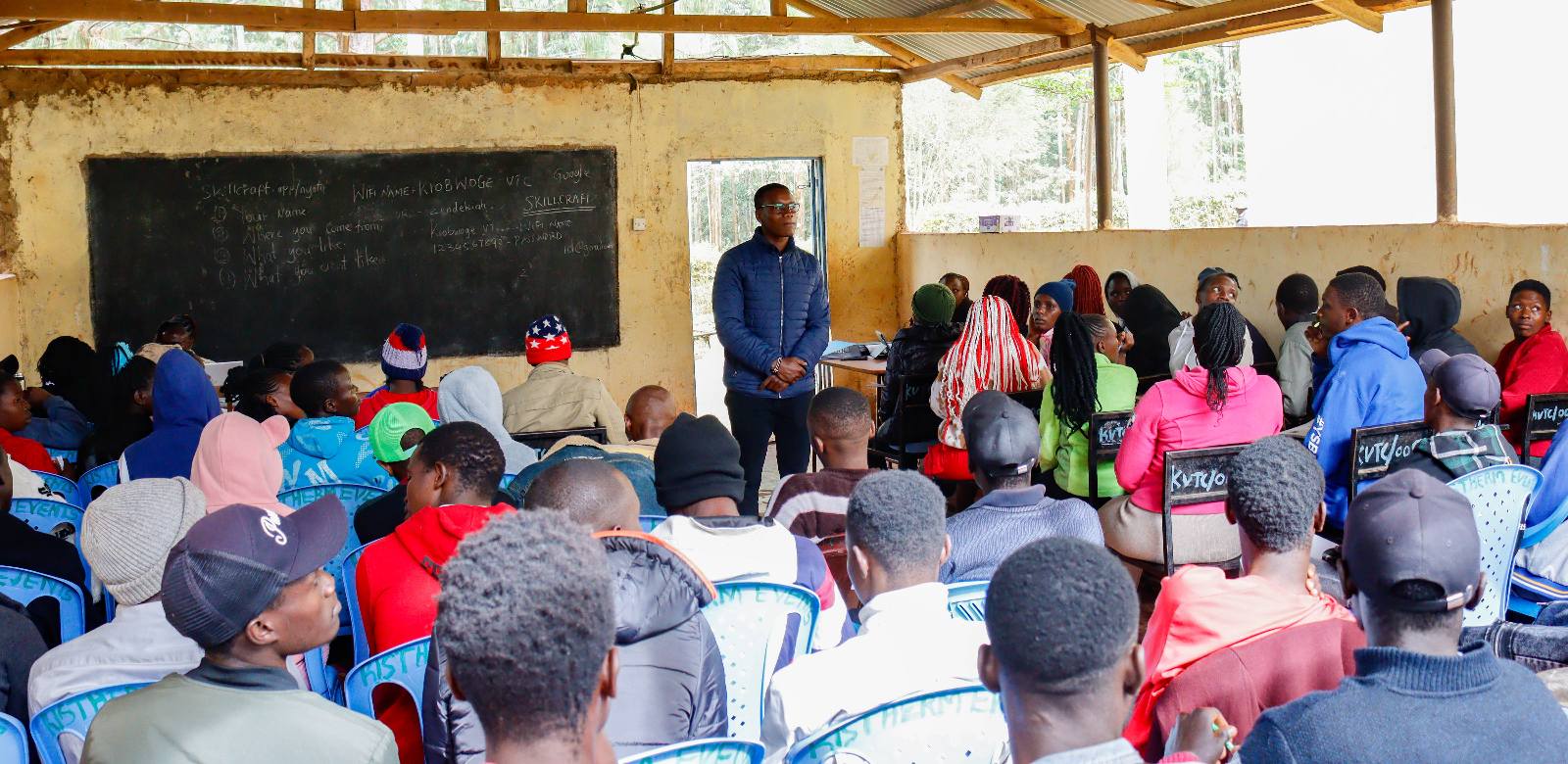
During the induction sessions, beneficiaries were taken through the programme structure, expectations, code of conduct, and the broader vision of the NYOTA Project. Emphasis was placed on punctuality, professionalism, teamwork, communication, and accountability.
“Many young people have technical abilities, but they struggle with communication, workplace discipline, and confidence. The SESD training is designed to bridge that gap. By the end of the 20 days, we expect to see transformation not just in skills, but in mindset”, shared a lead trainer facilitating SESD.
Each beneficiary received an official training manual from the Kenya Institute of Curriculum Development (KICD), approved SESD curriculum. The manual will guide them through modules covering emotional intelligence, financial discipline, resilience, teamwork, business fundamentals, and professional conduct.
Voices from the beneficiaries expressed hope, confidence, and opportunity, marking the programme as a turning point.
A beneficiary from Nakuru County voiced optimism:
“This programme has given me renewed hope. I have always wanted to grow my skills, but I did not know where to start. I believe this training will help me present myself better and compete in the job market. Now I feel that I am on the right path.”
Another participant from Kisii County highlighted the value of apprenticeship:
“The opportunity to work under a master craftsman for five months is very important to me. It will give me real experience and exposure that I could not afford on my own.”
Lot 1 Cohort 2 induction reinforced the NYOTA Project’s commitment to inclusivity and equal access. Youth from diverse backgrounds, including young women, persons with disabilities, and those from marginalized communities, are fully participating without paying any fees.
A young female beneficiary from Homa Bay County added:
“What encourages me most is that the programme is inclusive and free. It shows that young mothers and persons from humble backgrounds are being given equal opportunities to succeed.”
This approach ensures that access to opportunity is based on merit and need, not financial ability. The SESD training is not only building employability skills but also restoring hope and opening pathways toward sustainable livelihoods.
The Journey Ahead
Upon completion of the 20-day SESD training, beneficiaries will transition into a five-month apprenticeship under experienced master craftsmen to gain hands-on, industry-relevant skills.
At the end of the apprenticeship period, participants will undertake an assessment administered by the National Industrial Training Authority (NITA). Successful candidates will receive certification recognizing their competencies and enhancing their employability prospects.
Next week, the OJE component will conduct Cohort 2 SESD induction in Lot Two counties of Bungoma, Busia, Vihiga, Kakamega, Kisumu, Migori, and Siaya as rollout continues across all programme lots.
Implementation dates for the remaining lot counties will be communicated at a later date. Here are a summary of the counties and their cluster lots.
LOT No | No of Counties | Name and Number of County | Constitutional County Code |
LOT 1 | 7 | Nakuru Narok Kericho Bomet Homabay Kisii Nyamira | 032 033 035 036 043 045 046 |
LOT 2 | 7 | Kakamega Vihiga Bungoma Busia Siaya Kisumu Migori | 037 038 039 040 041 042 044 |
LOT 3 | 5 | Kwale Taita Taveta Kitui Machakos Makueni | 002 006 015 016 017 |
LOT 4 | 7 | Meru Tharaka Nithi Embu Nyandarua Nyeri Kirinyaga Murang’a | 012 013 014 018 019 020 021 |
LOT 5 | 5 | Marsabit Isiolo Turkana Laikipia Marsabit Samburu Laikipia | 010 011 023 025 023 025 031 |
LOT 6 | 6 | West Pokot Trans Nzoia Uasin Gishu Elgeyo Marakwet Nandi Baringo | 024 026 027 028 029 030 |
LOT 7 | 7 | Mombasa Kilifi Tana River Lamu Garissa Wajir Mandera | 001 003 004 005 007 008 009 |
LOT 8 | 3 | Kiambu Kajiado Nairobi | 022 034 047 |
The OJE component is a flagship intervention under the NYOTA Project, targeting 90,000 youth across all 47 counties. Through partnerships with master craftsmen and employers, the programme ensures beneficiaries acquire practical, market-relevant skills that prepare them for employment or entrepreneurship.
Financed by the World Bank, the NYOTA Project remains committed to empowering Kenya’s youth as a strategic investment in sustainable livelihoods and national development.